

173Views 0Comments
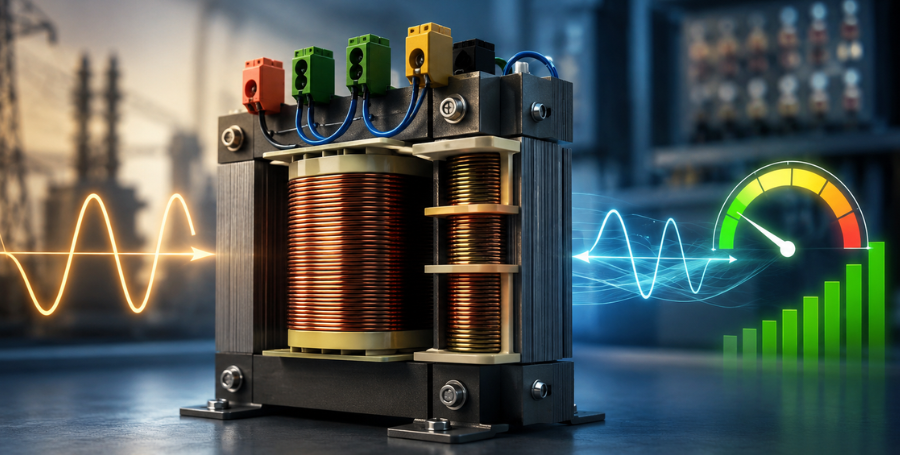
Understanding Voltage Regulation and Efficiency in Control Transformers
Control transformers are very significant in the industrial sector as they provide stable and accurate voltage supply for the necessary equipment and control circuits. Voltage regulation and transformer efficiency, when high, are extremely important to the performance consistency and preventing equipment damage. Reliable solutions are the concern of businesses that should engage with the best Control Transformer Manufacturers who make products that are not only good but also appropriate for the load requirements. The right control transformer can enhance efficiency and lower energy costs wherever it is used, be it in automation systems, control panels, or industrial equipment.
Besides, the right choice of Control Transformer Manufacturers leads to long-lasting performance, no downtime or very little and voltage stability that is optimal across all applications.
What is a Control Transformer?
A control transformer is a special type of transformer that is meant to provide voltage to control circuits, relays, or instruments. Control transformers are different from power transformers in that they are used for smaller loads, but they do it with high precision, thereby allowing the sensitive equipment to receive stable voltage.
Major advantages of control transformers:
- Supplies power to control circuits and machinery.
- Suitable for low to medium power usage only.
- Provides the load with a voltage that varies less than 5%.
- Small and of very high quality for use in industrial areas.
- The best manufacturers offer transformers according to customer specifications.
- Supports operations that are critical with safety and efficiency.
When working with top Control Transformer Manufacturers, it is a guarantee that the transformers produced will be of great quality and also comply with the industrial standards.
Understanding Voltage Regulation
Voltage regulation is an excellent feature of a transformer that can keep the output voltage constant even when the resistance changes. The maintenance of the same voltage level is very important in a heavy-duty environment, and even a slight change can lead to the wrong operation of the machine.
- The formula for calculating the percentage voltage drop during the operation of a transformer is given by ((No-load Voltage – Full-load Voltage) / Full-load Voltage) × 100.
- Better voltage stability is characterized by a lower percentage.
- Load variation, resistance of winding, and core design are among the factors that determine regulation.
- Essential for precise equipment and automated systems.
- The transformers produced by reputable Control Transformer Manufacturers have been set with excellent regulation qualities.
- Performance will be reliable under different load conditions.
Selection of the right transformer from reliable Control Transformer Manufacturers will result in stable voltage, power losses being minimized, and protection of delicate industrial equipment.
Factors Affecting Voltage Regulation
The voltage regulation of a control transformer is affected by multiple reasons making it incapable of providing stable voltage for different load conditions. The selection of high-quality control transformers from reputable manufacturers guarantees show and reliability.
Major Factors:
Load Variation: Heavy and large load changes create voltage fluctuations.
Winding Resistance: The high resistance of either the primary or secondary winding affects voltage stability.
Core Design and Material: The losses which occur in the core are the primary cause of poor regulation and they can be reduced by using efficient materials.
Operating Temperature: The transformer can fail if it gets too hot.
Impedance Characteristics: Transformers with lower impedance are always better in voltage regulation.
Engaging with reputable control transformer manufacturers helps in the optimization of these factors for accurate and sound voltage control.
Understanding Efficiency in Control Transformers
Efficiency is a term that describes the ratio of the usable output power the transformer gets against the input power and with the minimum losses. The usage of high-efficiency transformers not only brings down the cost of energy but also raises the reliability of the whole system. Manufacturers of Control Transformers who are highly regarded for their reliability design their transformers in such a way that they will be the most efficient possible without the performance being affected.
Key Points on ability:
Meanings: Ability (%) = (Output Power ÷ Input Power) × 100
Core Losses: Process lag and eddy current losses take their toll on efficiency.
Copper Losses: Resistance in windings leads to energy being lost in the form of heat.
Load Conditions: Working the transformer close to the rated load will result in the best efficiency being procured.

Energy Savings: The use of effective transformers will lower electricity consumption, thereby reducing the carbon footprint.
Industry Compliance: Reputable Control Transformer Manufacturers observe the regulations that are set in order to continuously produce transformers with high efficiency.
Factors Influencing Efficiency in Control Transformers
The efficiency of a control transformer is shaped by multiple factors. The selection of high-quality items from trusted Control Transformer Manufacturers guarantees the best efficiency and the longest life.
Core Material Quality: Excellent materials are applied to reduce losses by hysteresis and eddy currents which in turn will result in better efficiency.
Winding Design and Resistance: Winding that has right resistance will lead to very small copper losses.
Load Conditions: Operating very close to the rated load will give the highest efficiency.
Maintenance Practices: Corrective maintenance and preventive maintenance practices applied by reliable Control Transformer Manufacturers will maintain the efficiency.
Voltage Regulation vs. Efficiency: How They Interrelate
Voltage regulation and efficiency are two important aspects that have a close connection in the case of control transformers. Sometimes, it is possible to achieve an improvement in one aspect at the expense of the other, thus making it imperative to carefully select the right transformer. The Trusted Control Transformer Manufacturers, on the other hand, are those who design transformers that can handle the balancing of both factors effectively.
Key Points:
Trade-off Consideration: Perfect voltage regulation can result in slight reduction of efficiency and vice versa.
Optimized Design: Top range transformers are capable of striking a proper balance between the low voltage drop and high efficiency.
Load Dependency: Both efficiency and voltage regulation have different characteristics according to the load condition
Industry Standards: Trustworthy Control Transformer Manufacturers are the ones that follow the standards to make both performance and energy usage optimal.
Tips for Selecting the Right Control Transformer
Control transformer selection is very important for the top qualities in the power such as reliability, efficiency, and stable voltage for the industrial applications. Thus, the very first step in picking the right transformer is working with the best Control Transformer Manufacturers.
Selection Tips:
Voltage and Load Ratings: Transformer specifications should be applied that meet the application requirements.
Efficiency Rating: Normally, high efficiency has less energy costs associated with it.
Voltage Regulation Specs: Equipment that need accuracy should look for low percentage regulation.
Custom Solutions: Manufacturers of Control Transformers provide the ideal transformer for the peculiar industrial requirements.
Reputation of Manufacturer: The manufacturers of Control Transformers that have gained the trust in the market are the ones that have products that are durable and reliable.
Maintenance and Best Practices
Periodic maintenance guarantees the efficient operation of control transformers, the continuous regulation of voltage, and lengthening of the service life. Professional Control Transformer Manufacturers with whom you can collaborate will offer you the best practice advice.
Support Advice:
- Always keep an eye on the windings, connectors and seclusion.
- Do not overload transformers to keep voltage even and efficiency in operation.
- No dirt on the transformers plus good ventilation equals no overheating.
- Resolutely keep an eye on the operating temperature and the load conditions.
- Periodically plan professional servicing by trusted Control Transformer Manufacturers.
Conclusion
Control Transformer Manufacturers that are reliable and of good quality will give you the best voltage regulation and also the most the best efficiency possible. The use of dependable transformers in an industrial setting will not only help with the performance of the whole plant but also reduce the costs of energy, and provide the equipment with a long life. By installing the right products and applying the right maintenance practices, the companies will always have power supply of good quality and they will also have improved operational efficiency. Working with well-informed Control Transformer Manufacturers assures that the customer gets the products that are durable and the ones that are energy-efficient and capable of being tailored to the industrial applications.
FAQs
Q1: What is the ideal voltage regulation for a control transformer?
The ideal voltage regulation is mostly in the range of 2 to 5%, which guarantees a good voltage supply for industrial applications.
Q2: How often should transformers be inspected?
Transformers need to be checked at least once in six or twelve months to perform at their best.
Q3: Does higher efficiency always imply better performance?
A higher efficiency means less energy lost, but at the same time good voltage regulation is another factor that is definitely needed for performance.
Q4: Is it possible to make control transformers specific for certain applications?
Yes, Control Transformer Manufacturers that are experienced will provide bespoke solutions so as to fulfill the specific industrial needs.